
Access Denied
IMPORTANT! If you’re a store owner, please make sure you have Customer accounts enabled in your Store Admin, as you have customer based locks set up with EasyLockdown app. Enable Customer Accounts
Crazy Science Project? Demystifying Cannabis Decarboxylation
By Team Clebby
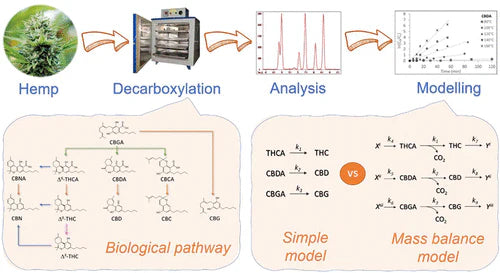
Table of contents
What Is Cannabis Decarboxylation? Why Decarboxylation Matters for Edibles Why Decarboxylation Matters for Edibles The Traditional At-Home Decarboxylation Process Why Decarboxylation Is So Easy to Mess Up How Decarboxylation Affects Flavor and Smell The Shift Toward Pre-Activated THC Ingredients How Clebby’s Removes Decarboxylation from the Equation Decarboxylation vs Smoking: Why Heat Still Matters Is Decarboxylation Still Relevant Today? FAQs About Cannabis Decarboxylation Final Thoughts: From Chemistry to Convenience
This article breaks down cannabis decarboxylation—the heating process that activates THC—and explains why it has traditionally made homemade edibles feel like a confusing science experiment. It covers how decarboxylation works, why it’s easy to mess up at home, and how poor temperature control can affect potency, flavor, and consistency. The article concludes by showing how modern THC baking mixes, like those from Clebby’s, eliminate the need for decarboxylation altogether by using pre-activated, lab-tested THC oil, making edibles simpler, more predictable, and far more approachable for home bakers.
If you’ve ever looked up how to make edibles from scratch, you’ve probably run into a wall of confusing instructions involving ovens, temperatures, timers, and chemistry terms that make the whole thing feel like a high-school lab experiment. That feeling usually starts with one word: cannabis decarboxylation.
Decarboxylation sounds intimidating, but it’s actually a simple concept that plays a huge role in whether edibles work at all. This article breaks down what decarboxylation is, why it matters, how people traditionally do it at home, and why modern THC baking mixes—like those from Clebby’s—are designed to remove this step entirely.

What Is Cannabis Decarboxylation?
At its most basic level, cannabis decarboxylation is the process of heating cannabis to activate its cannabinoids. Raw cannabis doesn’t naturally contain much THC in its psychoactive form. Instead, it contains THCA, which does not produce a high when eaten.
When cannabis is heated, a chemical reaction removes a small molecular group (a carboxyl group) from THCA, converting it into THC—the compound responsible for the effects people associate with edibles and smoking.
In plain English:
Decarboxylation is what turns inactive cannabis into active cannabis.
Why Decarboxylation Matters for Edibles
At its most basic level, cannabis decarboxylation is the process of heating cannabis to activate its cannabinoids. Raw cannabis doesn’t naturally contain much THC in its psychoactive form. Instead, it contains THCA, which does not produce a high when eaten.
When cannabis is heated, a chemical reaction removes a small molecular group (a carboxyl group) from THCA, converting it into THC—the compound responsible for the effects people associate with edibles and smoking.
In plain English:
Decarboxylation is what turns inactive cannabis into active cannabis.
Why Decarboxylation Matters for Edibles
If cannabis isn’t decarboxylated before being eaten, most people won’t feel much of anything. That’s because your digestive system doesn’t convert THCA into THC on its own.
This is why early edible recipes always included a heating step and why skipping cannabis decarboxylation usually results in wasted flower and disappointing brownies.
Decarboxylation matters because it:
- Activates THC so it actually works when eaten
- Determines how strong an edible will be
- Affects flavor and aroma
- Impacts consistency from batch to batch
Without decarboxylation, edibles are unpredictable at best.

The Traditional At-Home Decarboxylation Process
For years, people making edibles at home followed some version of the same decarb routine. While methods vary, they usually include the same core steps.
Typical DIY decarboxylation steps
- Break cannabis flower into small pieces
- Spread it evenly on a baking sheet
- Heat it in an oven at a specific temperature
- Stir or rotate during heating
- Cool before infusing into butter or oil
Most guides recommend temperatures between 220–245°F for 30–45 minutes, but even small deviations can change results. Too cool, and the cannabis stays under-activated. Too hot, and THC begins to degrade.
This is where the “crazy science project” feeling really kicks in.

Why Decarboxylation Is So Easy to Mess Up
Even though cannabis decarboxylation sounds straightforward, it’s surprisingly easy to get wrong at home.
Common problems include:
- Inaccurate oven temperatures
- Uneven heating across the tray
- Over-drying or scorching the flower
- Strong cannabis odors filling the house
- Inconsistent potency between batches
On top of that, most people don’t know the exact THC content of their flower, which makes dosing almost impossible without lab testing.
This is one of the main reasons early homemade edibles had such a mixed reputation.
How Decarboxylation Affects Flavor and Smell
Another downside of DIY cannabis decarboxylation is flavor. Heating raw flower releases terpenes and plant compounds that can overpower desserts if not handled carefully.
This often leads to:
- Bitter or grassy aftertastes
- Strong lingering cannabis smells
- Desserts that taste more like weed than chocolate
For people who love baking but don’t love that flavor profile, decarboxylation becomes a major barrier to enjoying edibles at home.
The Shift Toward Pre-Activated THC Ingredients
As edibles evolved, manufacturers realized that asking consumers to decarboxylate cannabis themselves was a huge friction point. It required time, precision, and tolerance for mistakes.
That realization led to pre-activated THC ingredients—oils, distillates, and infusions that are already decarboxylated and tested before they ever reach the consumer.
This shift is what made products like THC baking mixes possible.
Instead of handling raw flower, users could simply add a measured, activated THC ingredient to a recipe and bake like normal.
How Clebby’s Removes Decarboxylation from the Equation
Clebby’s takes the complexity of cannabis decarboxylation out of the home kitchen entirely. Each baking mix includes a pre-measured bottle of hemp-derived THC oil that has already been activated and lab tested.
That means:
- No oven-based decarb step
- No guessing if the THC is “activated enough”
- No strong cannabis smell during prep
- No extra math beyond cutting portions
You follow the same steps you would with any boxed baking mix. The science already happened before the product reached you.
You can see how their mixes are formulated and tested by browsing the Clebby’s THC baking mixes collection and reviewing their lab results on the Clebby’s COA page.
Decarboxylation vs Smoking: Why Heat Still Matters
People sometimes ask why smoking works without worrying about cannabis decarboxylation. The answer is simple: combustion provides instant heat.
When cannabis is smoked or vaporized, the heat instantly converts THCA into THC. With edibles, that heat has to come before consumption, not during.
That’s why raw cannabis won’t work the same way in food, and why decarboxylation remains a critical step in edible preparation—unless it’s already been done for you.
Is Decarboxylation Still Relevant Today?
Absolutely—but mostly behind the scenes.
Modern consumers don’t need to perform cannabis decarboxylation themselves anymore, but it’s still happening at the manufacturing level. Responsible brands activate THC under controlled conditions, verify potency with lab testing, and clearly label results.
This approach:
- Improves safety
- Increases consistency
- Reduces user error
- Makes edibles more accessible
It’s one of the biggest reasons edibles have gone from “hit or miss” to mainstream.
FAQs About Cannabis Decarboxylation
What happens if cannabis isn’t decarboxylated?
Most people will feel little to no psychoactive effect because THCA isn’t converted into THC.
Can I decarboxylate cannabis in the microwave or slow cooker?
Some people try, but results are highly inconsistent and easy to ruin.
Does decarboxylation change THC strength?
Yes. Proper cannabis decarboxylation determines how much THC becomes available for absorption.
Why don’t THC baking mixes require decarboxylation?
Because the THC oil included has already been activated, tested, and measured before packaging.
Is decarboxylation legal?
The legality depends on local laws and cannabis source. Hemp-derived THC products follow federal and state guidelines.
Final Thoughts: From Chemistry to Convenience
Decarboxylation used to be the gatekeeper of homemade edibles. If you didn’t understand it—or got it wrong—your brownies paid the price.
Today, cannabis decarboxylation still matters, but it no longer has to be your problem. Brands like Clebby’s handle the science upfront so you can focus on what actually makes edibles fun: baking, sharing, and enjoying a predictable experience.
Instead of a kitchen science project, modern edibles are finally just… dessert.
If you want to skip the lab work and go straight to baking, you can explore Clebby’s THC baking mixes and see how far edibles have come.


Sabrina Clebnik (aka Clebby)
has been known for her brownies since she was tall enough to reach the oven. They were a staple at every gathering...and everyone always wanted seconds. And it wasn’t just brownies…Friends and relatives relentlessly requested the "secret recipes" that made all of Sabrina's baked goods disappear faster than you could say, "Save me a corner piece."

Reading next
Jan 8, 2026
Team Clebby
Jan 8, 2026
Team Clebby
Invalid password
Enter
Leave a comment
This site is protected by hCaptcha and the hCaptcha Privacy Policy and Terms of Service apply.